Hunza’s food reflects its mountain life: whole grains, dairy, dried fruit and, above all, apricots. Dishes are simple, filling and surprisingly different from lowland Pakistani cooking. Here are the essentials to try.
In this guide
Must-try dishes
| Dish | What it is |
|---|---|
| Chapshuro | A thin pie or flatbread filled with spiced minced meat and onions, often compared to a savoury turnover. |
| Diram fitti | A sweet, hearty pudding of wheat bread soaked in apricot oil and sugar, often served at celebrations. |
| Harissa | A slow-cooked dish of wheat and meat pounded together into a thick, comforting stew; a festival and winter favourite. |
| Hunza walnut cake | A dense, nutty cake sold in Karimabad and Aliabad bakeries. |
| Apricots | Fresh in summer, sun-dried through winter, and pressed for kernel oil. |
| Local breads | Thick brown breads, often baked on a hot stone or in village ovens. |
Apricots, in every form
Apricots are Hunza’s signature crop. You will find dried apricots (white and golden), apricot jam, soup, juice and kernel oil. Try the dried varieties and ask which are local — the sweetness is different from imported dried fruit.
Where to eat
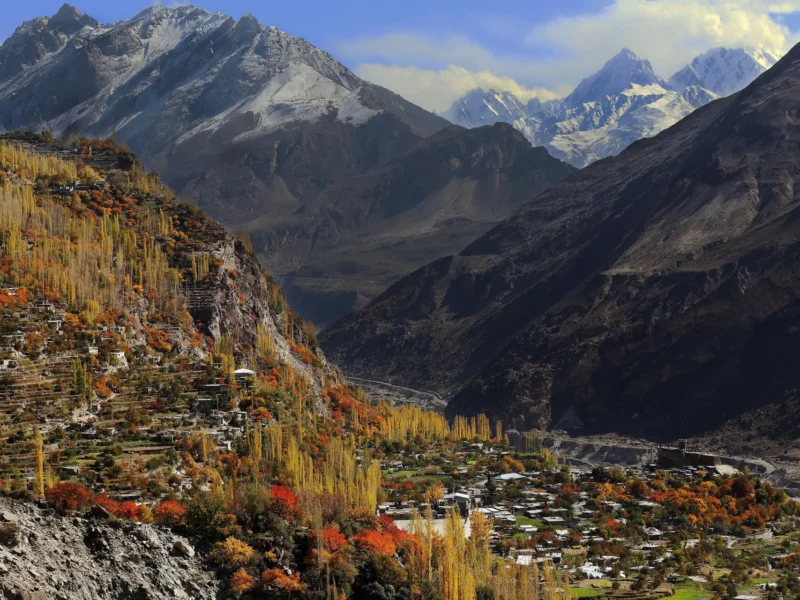
- Karimabad cafés and restaurants — views of the forts and valley with a mix of local and familiar dishes.
- Family guesthouses — often the best place for traditional meals if you book ahead.
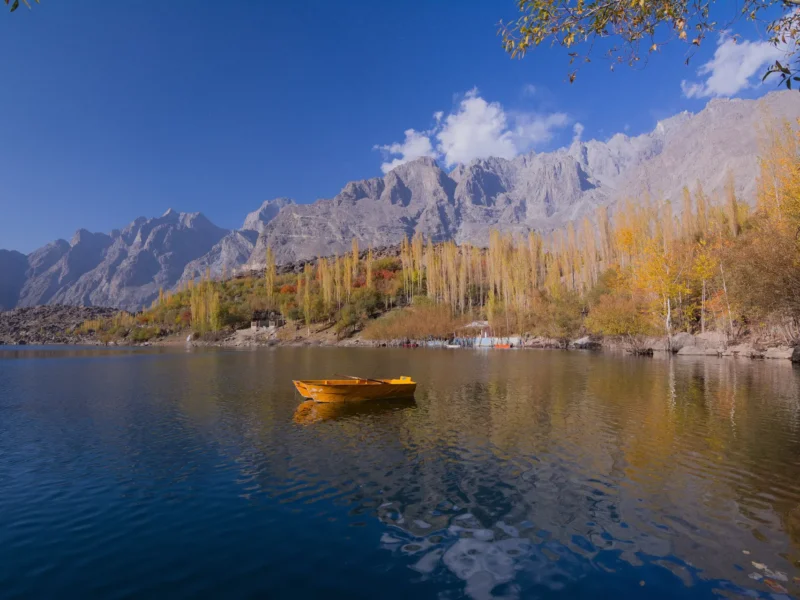
- Lakeside restaurants at Attabad — trout and fresh grilled fish by the water.
- Village homes — if invited, accept graciously; it is a highlight of travelling here.
Eating well while travelling
- Eat freshly cooked, hot food and drink bottled or filtered water.
- Go gently on rich food on your first day at altitude.
- If you have dietary needs (vegetarian, halal or allergies), tell your hotel at booking; it is usually manageable but options in remote areas can be limited.
- Carry snacks for long drives — dried apricots and walnuts are perfect.
Planning meals around a longer route? See our 5-day Hunza itinerary and the full Hunza guide. For travel etiquette more generally, read our notes for solo travellers.
A simple Hunza food day
- Breakfast: local bread with apricot jam, tea and eggs at your hotel.
- Mid-morning: dried apricots and walnuts from a Karimabad shop.
- Lunch: chapshuro or a local stew at a family restaurant.
- Afternoon: walnut cake and tea in a café with a fort view.
- Dinner: a traditional meal at your guesthouse, ideally ordered a day ahead.
Buying food souvenirs
- Buy dried apricots, walnuts and apricot oil from established shops or markets and check seals and dates.
- Ask what is locally produced; some items are imported.
- Pack liquids carefully and keep them out of checked bags if you are flying.
Eating etiquette
If you are invited to a home, accept tea, share what is offered and compliment the cook. Remove shoes if others do, and avoid wasting food. Dress modestly and ask permission before taking photographs inside a home.
Frequently asked questions
Is Hunza food vegetarian-friendly?
Many dishes are meat-based, but vegetables, lentils, bread, eggs and dairy are widely available. Mention your needs when booking.
What souvenirs should I buy from Hunza?
Dried apricots, apricot oil, walnuts and local handicrafts such as woollen caps and shawls.
Is tap water safe in Hunza?
Stick to bottled or properly filtered water to avoid upset stomachs.
Can I try diram fitti anywhere?
It is often made for special occasions and may need to be ordered in advance at a guesthouse.
Are there halal restrictions?
Meat served in Hunza is generally halal, as it is across Pakistan.