Hunza’s weather depends on altitude as much as on the month. Karimabad sits at roughly 2,500 m; Upper Hunza and Khunjerab are much higher and colder. The figures below are approximate daytime ranges in Karimabad, intended as a planning guide rather than a forecast.
In this guide
Month by month
| Month | Typical daytime | What it feels like |
|---|---|---|
| December–February | Around 0–8 °C; nights well below freezing | Cold and dry; snow on peaks and sometimes in the valley; many hotels closed |
| March | About 8–15 °C | Thawing; first blossom in the lowest villages |
| April | About 14–20 °C | Blossom season; fresh, bright, cool nights |
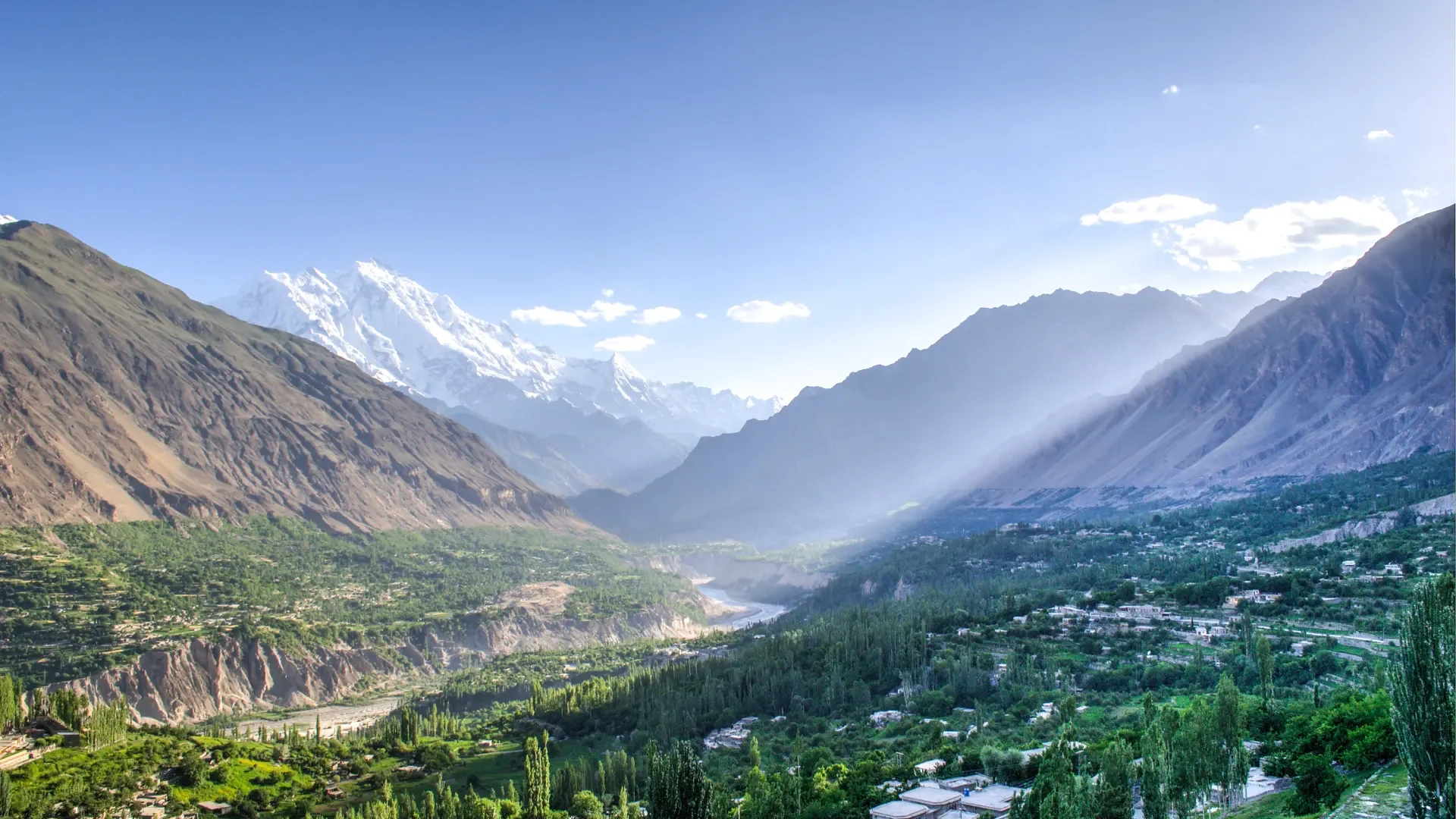
| May | About 19–25 °C | Mild and green; one of the best months |
| June–August | About 25–32 °C | Warm to hot by day; cool evenings; occasional thunderstorms |
| September | About 20–25 °C | Clear skies, crisp air |
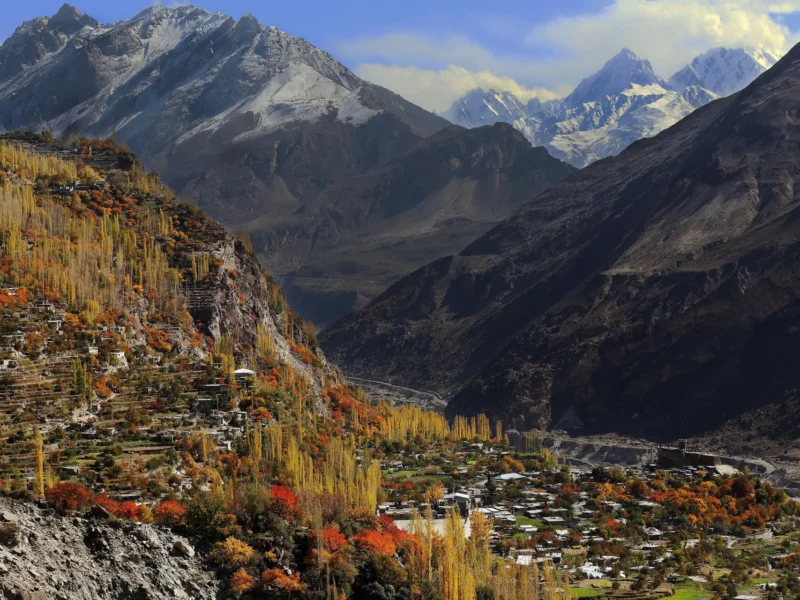
| October | About 13–19 °C | Autumn colour; cold nights |
| November | About 7–12 °C | Late colour then winter sets in |
Rain and snow
Hunza is in a rain shadow, so it is far drier than the lowlands. Light rain and the odd thunderstorm can occur in spring and summer, and heavy rainfall elsewhere in Pakistan during the monsoon can still cause landslides on the highway. Snow is common from December to February, particularly at higher altitudes.
Temperature differences by place
- Aliabad and Karimabad: the baseline in the table above.
- Attabad, Gulmit, Passu: a few degrees cooler as you climb.
- Khunjerab Pass: often below freezing at night even in summer.
What to pack by season
- Spring/autumn: fleece, warm jacket, light rain layer, walking shoes.
- Summer: light clothes for the day, a warm layer for evenings, sunscreen, hat and sunglasses.
- Winter: thermals, down jacket, waterproof boots, gloves and hat.
Our packing checklist has more. To choose your month, read best time to visit Northern Pakistan, then see the Hunza guide.
Choosing your month by priority
| If you want… | Choose… |
|---|---|
| Blossom | Early to mid-April |
| Mild weather and green valleys | May or September |
| Warmest days and open high routes | July and August |
| Golden colours and clear skies | Late October |
| Quiet and snow | December to February (with preparation) |
Daylight and daily planning
Days are long in summer, with good light until early evening, and short in winter. Plan long drives for the morning and sightseeing for the afternoon; in winter, plan to be settled in your hotel before dark.
Microclimates
Hunza’s valley floor is warmer than its high villages, and shaded lanes are noticeably colder than sunny terraces. Take layers you can add or remove easily, and remember that the sun at altitude feels stronger than the air temperature suggests.
Frequently asked questions
What is the best month to visit Hunza?
April for blossom, May and September for mild weather, and late October for autumn colour.
Does it snow in Hunza?
Yes, mainly December to February. Higher areas can get snow earlier and later.
Is Hunza hot in summer?
Days can be warm to hot in the valley, but evenings are cool and higher places stay cold.
What is the coldest month in Hunza?
January is usually the coldest, with nights well below freezing.
Do I need warm clothes in summer?
A warm layer is still useful for evenings and for high points such as Khunjerab.